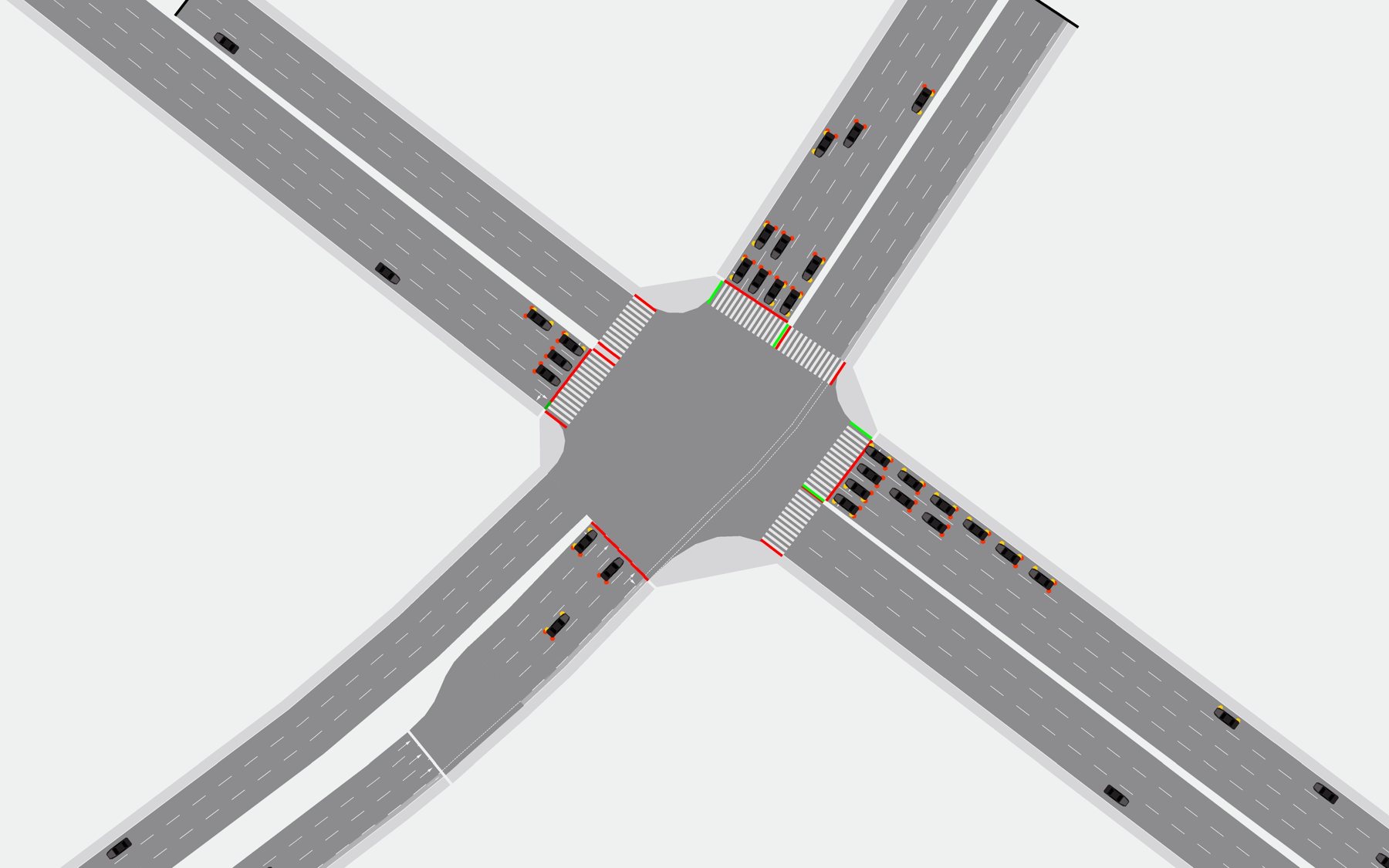
01 · Intersection
PTV Epics
Optimises a single intersection according to local traffic demand.
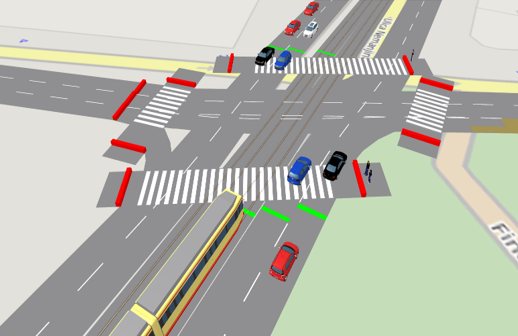

Signal timings that follow real traffic demand.
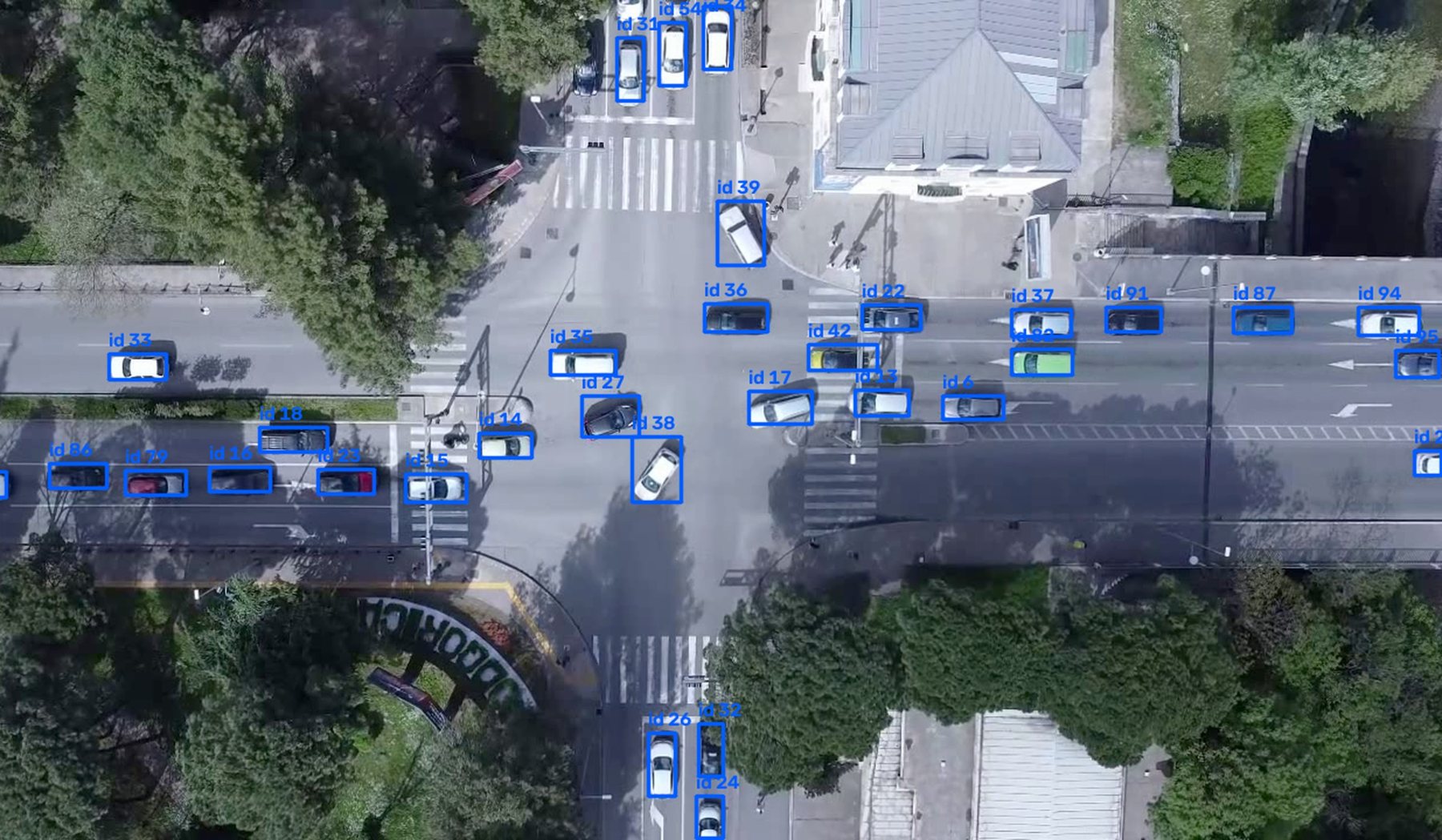
Adaptive control uses detector data to adapt how each signal group is served to the traffic actually present, and to coordinate intersections across the network. The goal: more efficient use of the road capacity a city already has.
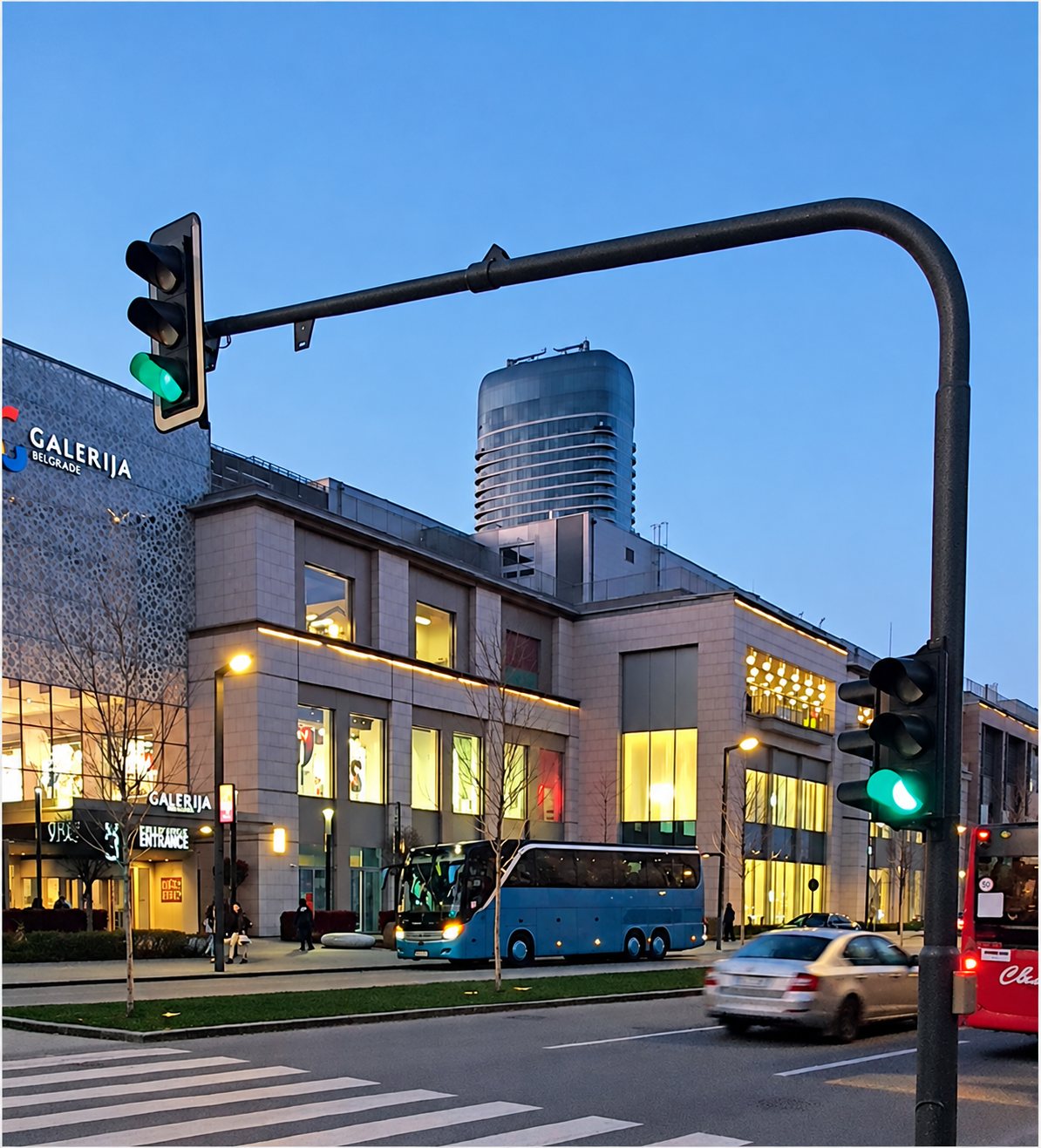
Optimises a single intersection according to local traffic demand.
Coordinates a group of intersections according to network load.
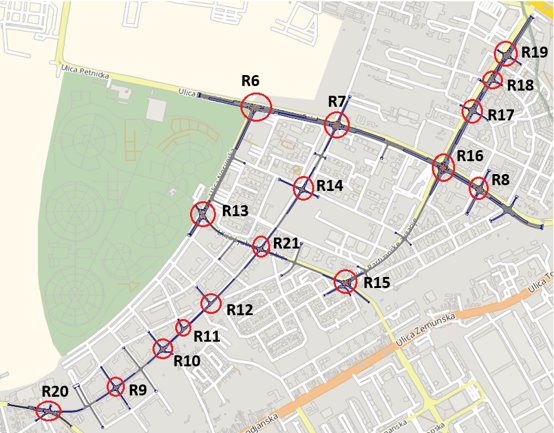
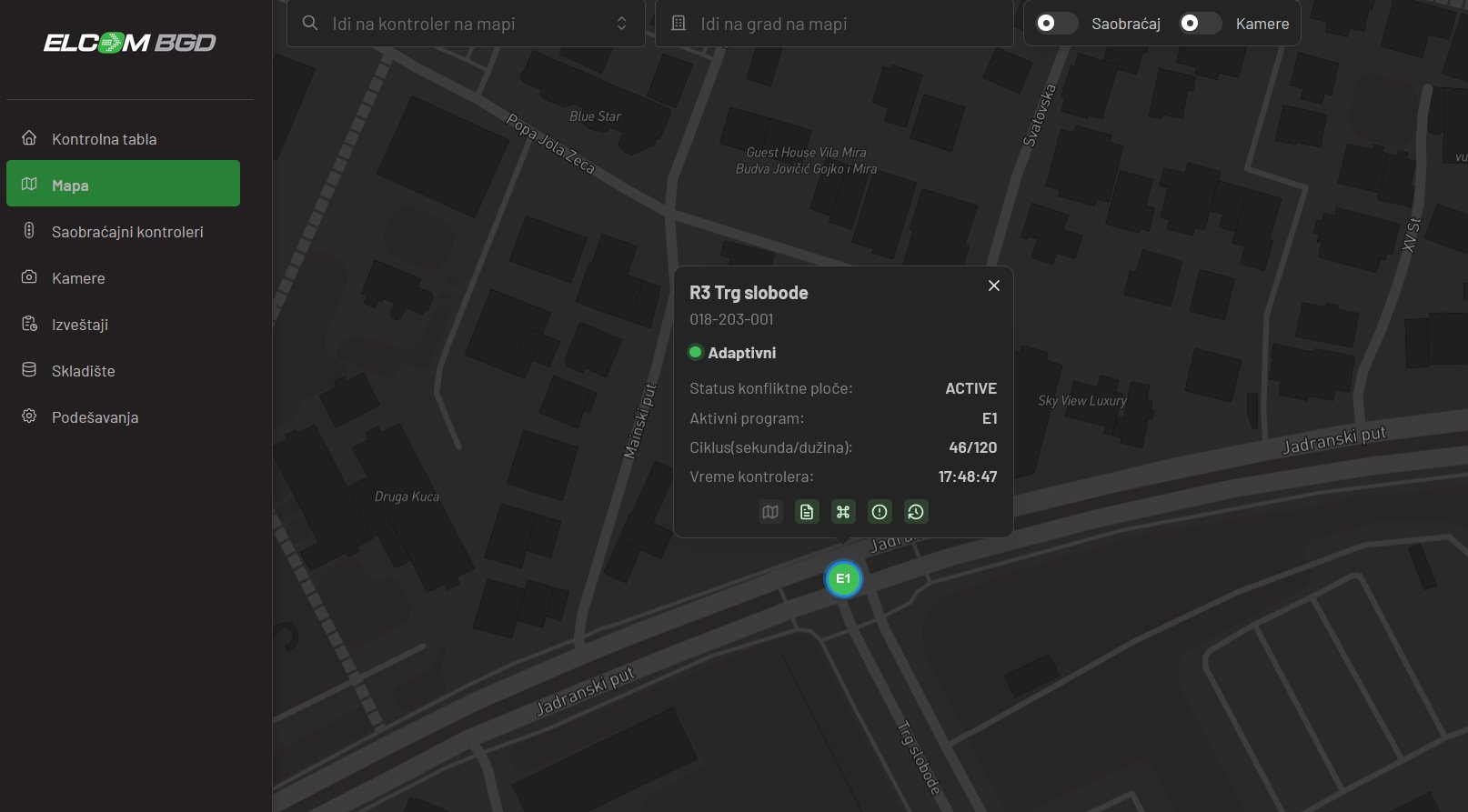
Monitoring, controller programming, remote commands, reports and coordination.
Discover SAUSWhat adapts: cycle length · green times · green-time offsets.
Base data and traffic counts. Signal plans and the network modelled in LISA and PTV Visum.
PTV Vissim, to test the solution and tune the control parameters.
Parameters transferred: EPICS on the controller, BALANCE on the server.
Tracked in SAUS. The PI (performance index) shows the effect of the optimisation.
Detector data updates the origin–destination matrix and calibrates the model, and control parameters are re-checked in simulation.