1Middle lane for direction B
Direction A
Direction B

Changing the direction of the middle traffic lane.
Changing the direction of the middle lane increases capacity in the direction with the higher traffic demand, where there is no room to widen the road by adding two or more lanes. Overhead signal displays, vehicle detection and a central control unit, connected to monitoring software, switch the middle lane between directions.
Four successive states of the lane signals. In each state, the row for direction A and the row for direction B show one signal for the left, middle and right lane.
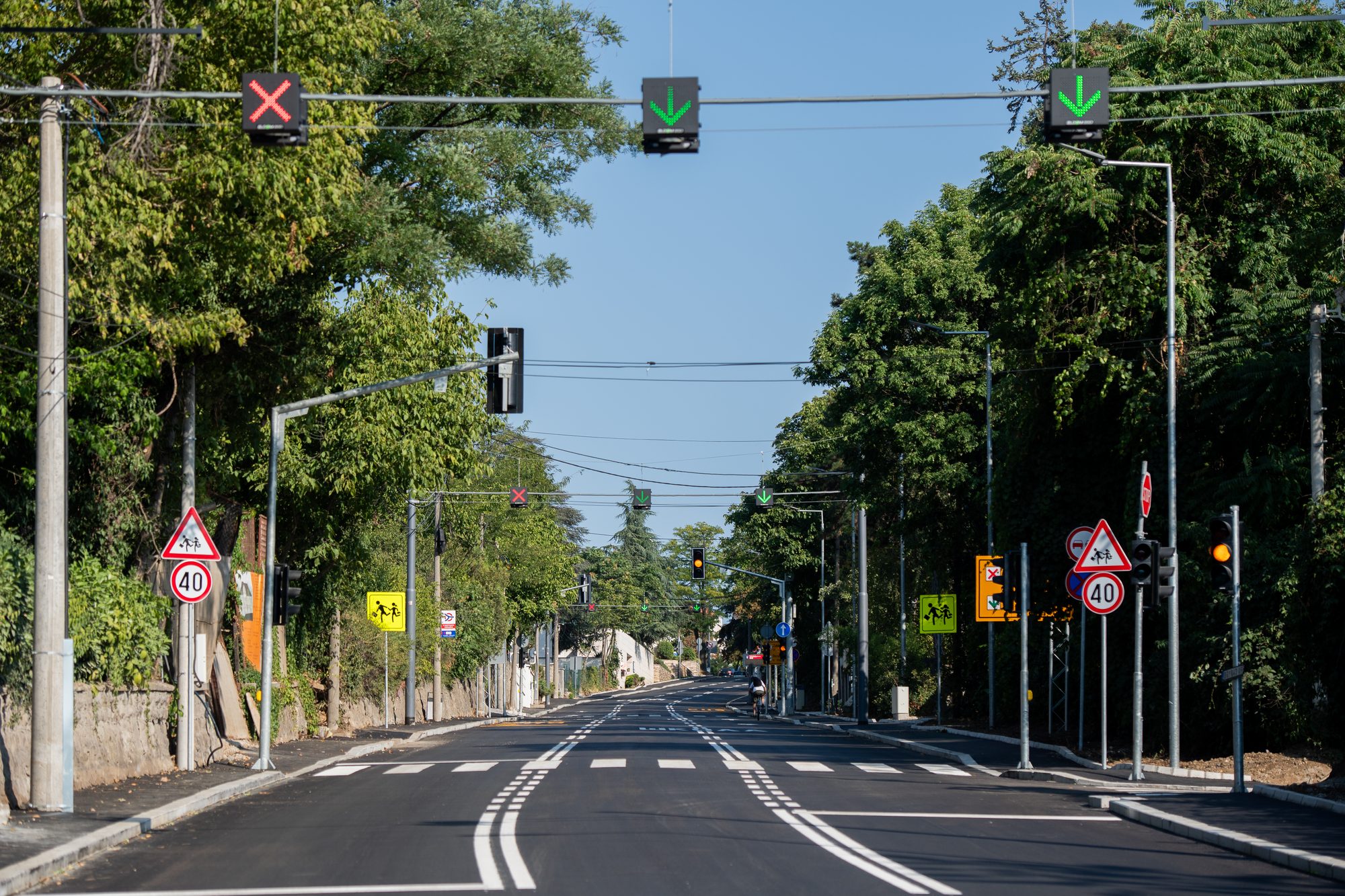
No passage for vehicles facing the sign.
Passage allowed for vehicles facing the sign.
A diagonal downward arrow means the lane must be left in the direction shown.
Serbian Rulebook on Traffic Signalling, Article 75, paragraphs 3–5.
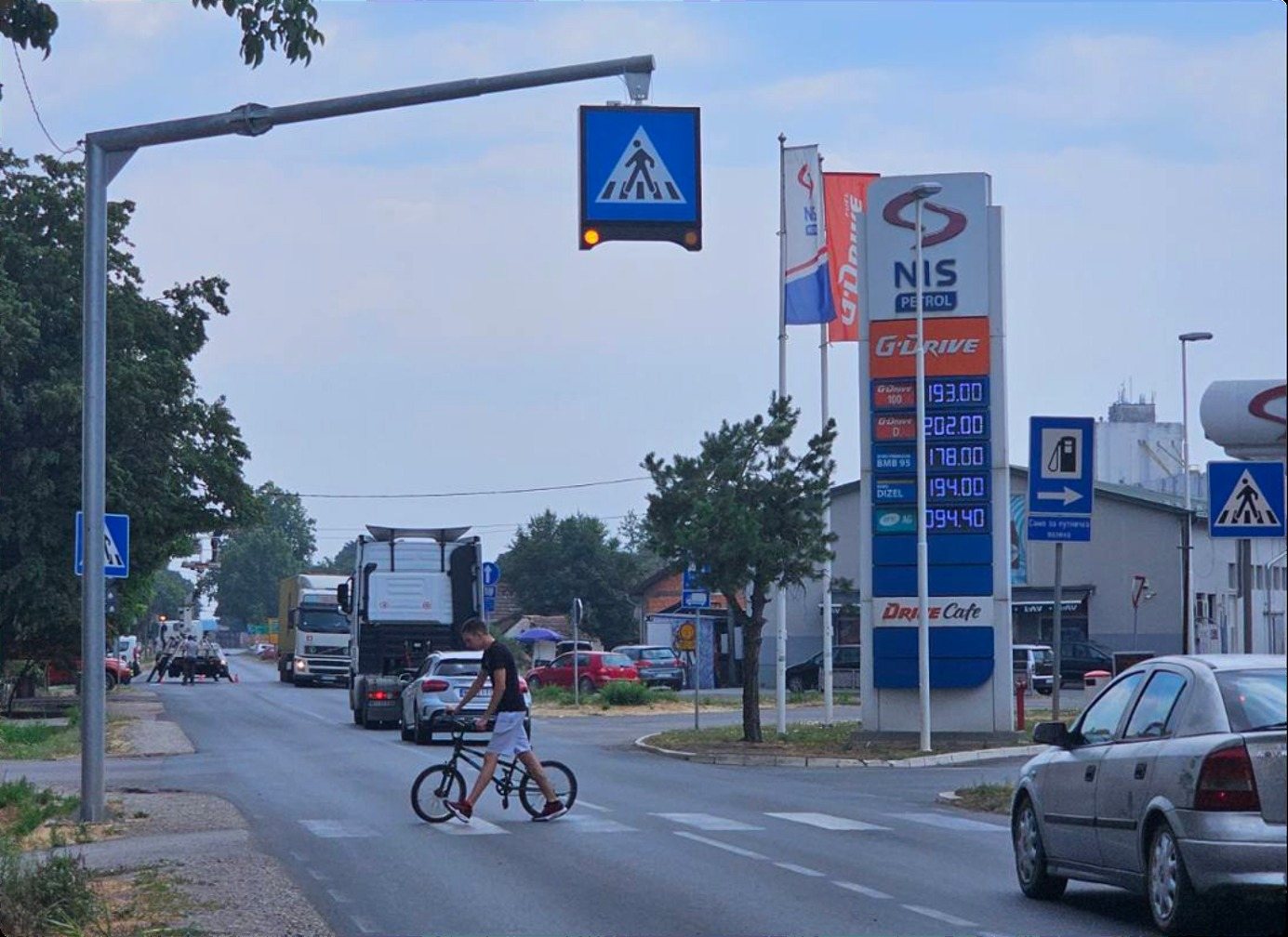
Signal displays, vehicle detection and a central control unit, connected to monitoring software.
Share of the middle lane in the total daily flow of each direction.
24-hour count at the central portal of the section.
Total installed: 162 signal displays